
Modernizing Research

It is estimated that 100-190 million animals suffer and die worldwide each year -- including 12-24 million in the United States -- after being captured or bred and used for experimentation. Precise US numbers are unknown, because researchers are not required to report numbers of rats, mice, and birds -- the majority of animals they use.
The Gregory J. Reiter Memorial Fund has supported multiple initiatives to end the use of animals in experiments, and to promote the development and application of modern technologies that both spare animals from suffering and produce better outcomes for people.
The Greg Fund is a current contributor to People for the Ethical Treatment of Animals (PETA) and the Physicians Committee for Responsible Medicine, and previously contributed to White Coat Waste Project – all of which have focused heavily on ending US government-funded animal experiments, through support for bipartisan legislation and work with stakeholders in and outside of government for transition to more human-relevant science.
The work of these organizations has contributed to landmark US policy shifts to date in 2025, including:

On April 10, 2025, the Food and Drug Administration (FDA) announced plans to phase out animal testing requirements for developing a range of drugs, starting with monoclonal antibodies that are used to treat cancer, Covid-19, and other diseases.

On April 29, 2025, the National Institutes of Health (NIH) announced adoption of a new initiative to expand innovative, human-based science while reducing animal use in research. The NIH, the largest US research funder, has historically spent more than half its $45 billion annual budget on animal studies, while also acknowledging that the failure rate of these studies – approximately 90% by multiple measures -- is unacceptably high.
Previous accomplishments resulting from these organizations’ work included:

Multiple federal agencies opened investigations into Elon Musk’s brain-computer interface company, Neuralink, after PCRM produced evidence that brain implant experiments had caused the deaths of at least 12 monkeys. In December 2022, Reuters reported that the US Department of Agriculture (USDA) and Department of Justice (DOJ) were investigating Neuralink for animal welfare violations. In December 2024, the Securities and Exchange Commission (SEC) opened a separate investigation.
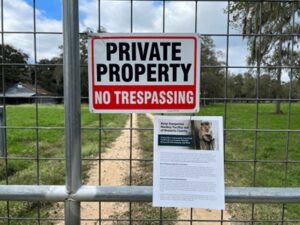
In September 2024, as a result of PETA’s advocacy, Charles River Labs -- the world’s largest breeder of animals for use in experiments -- cancelled plans for a facility that would have housed up to 43,000 primates on ecologically sensitive land next to a wildlife refuge in Brazoria County, Texas.

In February 2024, PETA’s Research Modernization Deal contributed to an NIH statement of commitment to promoting non-animal research.
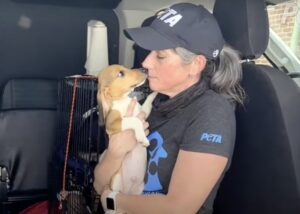
Over the period June through September 2022, research breeding facility Envigo was closed, and thousands of surviving dogs were released for adoption. In June 2024, Inotiv, Envigo's parent company, was ordered to pay a record $35 million in criminal fines for violating the federal Animal Welfare Act and Clean Water Act. PETA’s investigation of the facility, and its work with Virginia and U.S. legislators and government officials, were critical to this outcome.

In September 2019, the U.S. Environmental Protection Agency (EPA) announced a plan to eliminate all chemical testing on mammals by 2035, and to immediately begin the transition to more modern and effective methods. PETA, PCRM, and White Coat Waste Project had all campaigned for this result, and all were represented at the news conference where then-EPA administrator Andrew Wheeler announced the plan. Although progress on the plan slowed in subsequent years, current EPA administrator Lee Zeldin announced in April 2025 a fresh commitment to phasing out animal testing.

PCRM co-sponsored the California Cruelty-Free Cosmetics Act -- signed into law in September 2018 and put into effect as of January 2020 -- which prohibits the sale of cosmetics in California if any component of the product was tested on animals. Eleven other US states have followed California’s lead in banning cosmetic testing on animals.
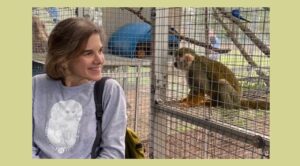
In January 2018, White Coat Waste Project successfully ended a deadly FDA nicotine addiction experiment on squirrel monkeys.
The Greg Fund joined a White Coat Waste coalition in this campaign, along with Dr. Jane Goodall and a bipartisan group of U.S. Congresspeople.
In November 2018, the 26 monkeys who survived the experiment -- including one named Gregory -- moved to freedom at Florida Jungle Friends Primate Sanctuary. The story was covered by CNN and the New York Times, among others.